Source Detachable Waterproof Container Bar for Dormitories, Villas, and Workshops
Compare 30 detachable waterproof container bar options for dormitories, villas, and workshops. These units feature fast installation, wind resistance, and customizable sizes to suit temporary offices, resorts, and retail spaces.
Key considerations
Products List




Comprehensive Sourcing Guide
Sourcing Guide for Detachable Waterproof Container Bars
The global shift toward modular and prefabricated construction has elevated the demand for detachable waterproof container bars. These units offer a unique blend of portability, rapid deployment, and structural integrity, making them ideal for temporary events, permanent pop-up retail, and flexible hospitality solutions. For procurement professionals, navigating this market requires a disciplined approach to verifying technical specifications, understanding compliance frameworks, and evaluating supplier capabilities without relying on unverified marketing claims. This guide synthesizes available product data to provide a robust framework for sourcing these specialized structures, ensuring that buyers can make informed decisions based on observable facts rather than speculative assertions.
Technical Specifications and Structural Integrity
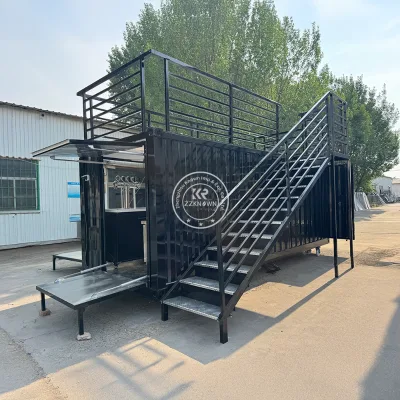
When evaluating a detachable waterproof container bar, the primary focus must be on the physical dimensions and the structural materials that ensure durability against environmental stressors. The available data indicates that these units typically adhere to specific dimensional standards, with observed sizes including 6058mm x 3025mm x 2591mm and variations such as 6058mm x 2438mm x 2591mm. A critical observation for procurement is the consistency in length, often aligning with standard shipping container metrics, while width and height may vary to suit specific site constraints. The structural assembly is predominantly achieved through bolted connections, a method that facilitates the "detachable" nature of the product, allowing for disassembly, transport, and reassembly with relative ease.
The insulation properties are a defining feature for a bar environment, where temperature control and sound dampening are essential. The supply chain data lists insulation materials including EPS (Expanded Polystyrene), PU (Polyurethane), and Rock Wool. Each material offers distinct thermal performance characteristics; however, the specific R-value or thermal conductivity is not explicitly provided in the general product attributes. Buyers must verify the thickness and density of these insulation layers to ensure they meet local energy codes and comfort requirements. Furthermore, the units are designed to withstand significant environmental loads. Observed specifications cite a wind load capacity of 220km/h and a seismic load rating of Grade 8. These figures suggest a robust engineering design intended for regions prone to high winds and seismic activity, but buyers should always request site-specific engineering calculations to confirm suitability for their exact location.
Compliance, Certification, and Safety Standards
Navigating the regulatory landscape is paramount when importing or installing modular structures. The product data highlights several certifications that serve as indicators of quality and compliance, including CE, ISO, and Cwb. The presence of CE marking suggests conformity with health, safety, and environmental protection standards for products sold within the European Economic Area, while ISO certifications, specifically ISO9001:2008, indicate adherence to quality management systems. It is crucial to understand that while these certifications are listed, they represent the manufacturer's claimed standards rather than a universal guarantee for every unit in a specific shipment.
Buyers must verify the validity of these certifications with the issuing bodies before finalizing a contract. The data also mentions specific product standards such as "2438mmX6058mmX2591mm" and "L6055W2435H2800mm," which serve as dimensional benchmarks rather than safety standards. In addition to certifications, the electrical infrastructure within these units is a critical compliance point. The observed specifications list essential electrical components including lights, switches, sockets, distribution boxes, and breakers. Procurement teams must ensure that the electrical systems comply with the local codes of the installation site, as the "Light, Switch, Socket" configuration provided by the supplier may not automatically meet regional voltage or grounding requirements. The "Cwb" certification mentioned in the data requires specific verification to understand its scope and relevance to the buyer's jurisdiction.
Cost Drivers and Pricing Variables
The pricing landscape for detachable container bars is highly variable, influenced by a complex matrix of customization, materials, and logistics. The observed price range in the market spans from $0.81 to $40,000 USD. This vast disparity indicates that the base unit price is likely a starting point that excludes significant variables such as interior finishing, custom branding, and specialized electrical or plumbing installations. The lower end of the spectrum likely represents a bare shell or a minimal configuration, while the upper end reflects fully finished, customized units with premium insulation and advanced features.
Several factors drive the final cost. First, the level of customization is a primary cost driver. The data confirms that customization is available, allowing buyers to tailor the unit for specific applications like cafes, shops, bars, or fast-food outlets. Custom dimensions, window placements, and interior layouts will inevitably increase the price. Second, the choice of insulation material impacts cost; Rock Wool generally commands a higher price point than EPS due to superior fire resistance and thermal properties. Third, logistics play a significant role. The packing specifications vary, with options ranging from 6 to 10 units per 40' HQ container, or specific configurations like 4 units per 20' SOC. The origin locations, noted as Shaoxing, Zhejiang, and Suzhou, China, suggest that shipping costs will depend on the buyer's proximity to these manufacturing hubs and current freight rates. Finally, the scale of the order affects the unit price, with MOQs observed between 1 and 1500 units, suggesting that bulk purchases may yield better per-unit economics.
Typical Applications and Functional Versatility
The versatility of detachable waterproof container bars is evident in the wide range of applications documented in the product data. These units are not limited to a single use case but are designed to serve as dormitories, villas, resort houses, temporary offices, workshops, and commercial retail spaces. The specific application of "Cafe/Shop/Bar/Fast Food" is explicitly highlighted, confirming their suitability for the hospitality and retail sectors. The ability to function as a "Warehouse Club," "Shopping Mall," or "Convenience Store" further underscores their adaptability.
The structural features support these diverse uses. The "Fast Installation" attribute and the "Easily Movable" characteristic make these units ideal for temporary events, seasonal pop-ups, or locations where the business may need to relocate. The waterproof and moisture-proof features are essential for outdoor applications, ensuring that the interior remains dry and protected regardless of weather conditions. Additionally, the "Eco-Friendliness" and "Earthquake Resistant" features align with modern sustainability goals and safety requirements. Whether used as a "Residential Hostel" or a "Brand Exclusive Shop," the detachable nature of the structure allows for rapid deployment and minimal site disruption. Buyers should assess their specific operational needs against these capabilities to determine if a container bar is the optimal solution for their project.
Supplier Evaluation and Quality Control
Selecting the right supplier requires a rigorous evaluation process that goes beyond the listed product attributes. The data indicates that suppliers are located in China, specifically in Shaoxing, Zhejiang, and Suzhou. While these regions are known for manufacturing, buyers must verify the specific factory capabilities and production history. A key aspect of supplier evaluation is the warranty and after-sales service. The observed warranty periods range from 1 to 2 years, and after-sales support includes "24 Hours Online Service." Buyers should clarify the scope of these warranties, specifically what is covered regarding structural integrity, insulation performance, and electrical systems.
Quality control measures should be a central part of the procurement strategy. The "Fast and Easy" installation claim implies a well-designed assembly process, but this must be validated through factory inspections or third-party testing. Buyers should request detailed drawings, material certificates for the insulation and steel components, and evidence of the wind and seismic load testing. The "All by Bolt" connection method should be scrutinized for the quality of the fasteners and the precision of the pre-drilled holes. Furthermore, the "Scale: Medium" attribute suggests that the supplier may handle mid-sized orders, but buyers should confirm their capacity to handle the specific volume required. Establishing clear communication channels and defining the inspection protocol before production begins is essential to mitigate risks associated with quality discrepancies.
Long-Term Procurement and Lifecycle Management
Sourcing a detachable container bar is not merely a transaction but an investment in a long-term asset. The lifecycle of these units involves installation, operation, potential relocation, and eventual decommissioning. The "2 Years" or "1 Year" warranty periods provide a baseline for initial performance assurance, but long-term maintenance is the responsibility of the owner. Buyers should consider the durability of the waterproofing and the longevity of the insulation materials, especially in harsh climates. The "Leak Proof" and "Waterproof" features are critical for preventing moisture damage over time, which can compromise the structural integrity and interior finishes.
Logistics and repurposing are also key considerations. The modular design allows for the unit to be moved, but each relocation incurs costs for disassembly, transport, and reassembly. Buyers should evaluate the ease of moving the unit based on the "Fast Installation" and "Easily Movable" attributes. Additionally, the end-of-life scenario should be considered; the "Eco-Friendliness" claim suggests that the materials may be recyclable, but buyers should verify the disposal options and environmental impact of the specific materials used. Finally, the scalability of the procurement strategy is important. If a buyer plans to expand their network of bars or shops, the ability to source additional units with consistent quality and specifications from the same supplier will be a significant advantage. Establishing a long-term partnership with a verified supplier can streamline future procurement and ensure consistency across all locations.
FAQs
What insulation materials are used in detachable waterproof container bars?
These units typically use EPS, PU, or Rock Wool for insulation. Buyers should verify the specific thickness and density of these layers to ensure they meet local energy codes and comfort requirements for the intended application.
Can detachable waterproof container bars withstand high winds and earthquakes?
Yes, observed specifications cite a wind load capacity of 220km/h and a seismic load rating of Grade 8. Buyers must request site-specific engineering calculations to confirm suitability for their exact location before installation.
How are detachable waterproof container bars connected and installed?
The structures are assembled using an all-bolt connection method for easy disassembly and transport. Installation is designed to be fast and easy on-site, allowing for rapid deployment with minimal site disruption.
What certifications do detachable waterproof container bar manufacturers hold?
Common certifications include CE, ISO, and Cwb, with ISO9001:2008 indicating quality management adherence. Buyers must verify the validity of these certifications with issuing bodies before finalizing any contract or shipment.
What is the typical price range for detachable waterproof container bars?
The observed price range spans from $0.81 to $40,000 USD depending on configuration. The lower end likely represents a bare shell, while the upper end reflects fully finished units with premium insulation and customization.
Which applications are suitable for detachable waterproof container bars?
These units serve as dormitories, villas, temporary offices, workshops, and commercial spaces like cafes or bars. Their modular design supports diverse uses including residential hostels, retail shops, and warehouse clubs.